Protecting Food Processing Plants from Stored Product Insects
Protecting Food Processing Plants from Stored Product Insects
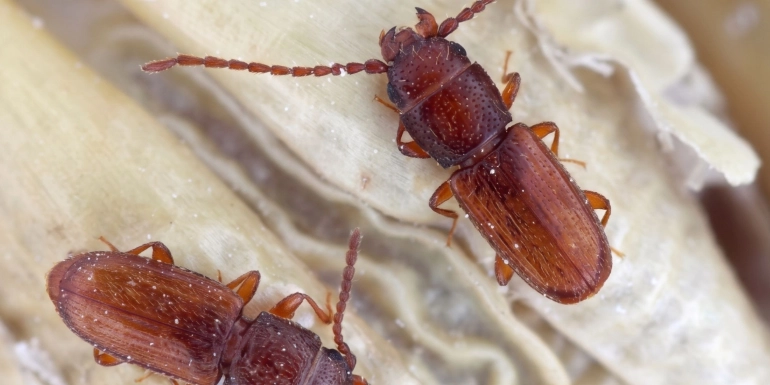
Stored product insects (SPIs), including beetles, weevils, moths, and mites, are a persistent threat to food processing facilities. These pests feed on grains, nuts, seeds, and dried goods, multiplying rapidly when provided with moisture and shelter. Because they are often microscopic or hidden within raw materials, infestations frequently go unnoticed until significant damage has occurred.
Why are stored product insects a risk to food safety?
Stored product insects pose a risk to food safety by contaminating products with feces, silk webbing, and shed skins, which can introduce harmful bacteria and molds. Beyond physical contamination, SPIs increase moisture levels in stored goods, leading to fungal growth and the production of toxic mycotoxins, which can alter the taste, smell, and performance of food ingredients.
Prevention Through Strategic Facility Design
Effective protection begins at the site perimeter and continues deep into the production floor. To maintain an audit-ready facility, managers must implement rigorous structural controls.
- Site & Exterior Controls: Eliminate standing water and minimize vegetation near building foundations. Lighting should be positioned away from entrances to avoid attracting flying SPIs like the Indian Meal Moth.
- Building Fortification: Seal all gaps around pipes and cables. Use fine mesh screens on all openings to prevent ingress while maintaining HVAC airflow.
- Sanitary Design: Interiors should feature durable, smooth surfaces. Avoiding cracks and crevices is essential, as even a few grams of flour dust in a wall void can support an entire insect colony.
Packaging: The Final Line of Defense
Packaging is a critical, yet often overlooked, component of an IPM strategy. While some SPIs can chew through paper and thin plastics, thicker materials such as PET or heavy polyethylene offer superior resistance. Ensuring that seals are airtight is vital, as larvae can enter through gaps as small as 0.1mm.
Monitoring and Integrated Pest Management (IPM)
A proactive approach relies on the "Prevent, Monitor, Act" framework. An effective IPM program for food plants includes:
- Pheromone Monitoring: Using species-specific traps to detect activity before it becomes a visible infestation.
- Routine Deep-Cleans: Targeting "dead zones" in machinery where organic dust accumulates.
- Professional Fly Control: Utilizing high-performance traps to capture adult moths.
Audit Readiness and Compliance
Modern food hygiene regulations require structured systems such as HACCP (or HARPC in the US). Pest control is not a secondary service; it is a fundamental pillar of Good Manufacturing Practices (GMP). Demonstrating a proactive, documented strategy for SPI management is essential for passing third-party audits and protecting your brand's reputation.
Frequently Asked Questions
What are the most common stored product insects in food plants?
The most common SPIs include the Indian Meal Moth, Warehouse Beetle, Flour Beetle, and Grain Weevil. Each species targets different stages of food production, from raw grain storage to finished, packaged goods. Identification is key, as each requires a specific monitoring and treatment approach.
How do SPIs impact HACCP compliance?
SPIs are categorized as a biological and physical hazard within a HACCP plan. Their presence indicates a failure in "Prerequisite Programs" like sanitation and supplier quality control. A single documented infestation during an audit can lead to a non-conformance report (NCR) or even a temporary facility shutdown.
Can temperature control prevent stored product insect growth?
Yes. Most SPIs become inactive at temperatures below 10°C and die when exposed to temperatures above 50°C for a sustained period. Maintaining cool, dry storage conditions (less than 13% moisture content for grains) is one of the most effective ways to inhibit insect reproduction without using chemicals.