Desert locust control in Kenya starts with recognising the warning signs before swarms reach your farm
Desert locust swarms are among the most destructive agricultural pests in the world, capable of consuming the same amount of food in one day as tens of thousands of people. For commercial farms in Kenya, early detection is the single most effective way to minimise crop damage. Monitoring breeding conditions, identifying hopper bands, and responding quickly with the appropriate authorities can significantly reduce losses and improve pest control outcomes.
What are desert locusts?
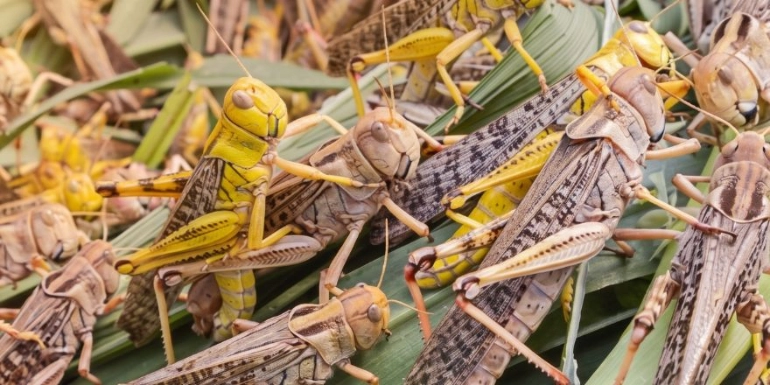
A desert locust (Schistocerca gregaria) is a migratory grasshopper species capable of changing behaviour under favourable environmental conditions. During periods of heavy rainfall and abundant vegetation, solitary locusts rapidly reproduce and transform into highly mobile swarms that travel hundreds of kilometres in a single day.
According to the Food and Agriculture Organization (FAO), a single square kilometre swarm may contain up to 80 million locusts, with each locust consuming approximately its own body weight in vegetation every day. This makes desert locusts one of the world's most destructive migratory agricultural pests.
Why Kenya Remains Vulnerable to Desert Locust Outbreaks
Kenya sits within one of East Africa's major desert locust migration routes. Weather systems originating from the Arabian Peninsula, Ethiopia and Somalia often create ideal breeding conditions before swarms move south into Kenya.
Climate variability has also increased the likelihood of favourable breeding conditions through:
- Above-average rainfall
- Cyclone activity in the Indian Ocean
- Increased green vegetation after rainy seasons
- Warm temperatures that accelerate breeding cycles
The 2019–2021 desert locust invasion was described by the FAO as the worst outbreak experienced in Kenya for over 70 years, threatening millions of hectares of cropland and pasture.
Early Warning Signs Every Commercial Farm Manager Should Watch For
Early intervention can make the difference between a manageable infestation and catastrophic crop losses.
1. Increased Grasshopper Activity
An unusual increase in grasshopper numbers, particularly after rainfall, can indicate favourable breeding conditions.
While not every grasshopper becomes a locust, sudden population growth should trigger increased field inspections.
2. Hopper Bands
Young locusts cannot fly immediately after hatching.
Instead, they move together across fields in dense marching groups known as hopper bands.
Look for:
- Dense groups of wingless insects
- Continuous movement across vegetation
- Rapid stripping of young crops
- Feeding concentrated in one direction
This is often the best stage for effective control.
3. Unusual Bird Activity
Large flocks of insect-eating birds may gather where hopper bands or emerging locust populations are developing.
While birds cannot eliminate infestations, their behaviour often serves as a useful natural indicator.
4. Fresh Egg-Laying Sites
Female locusts prefer moist sandy soils for egg laying.
Watch for:
- Recently disturbed soil
- Bare sandy patches
- Areas receiving recent rainfall
- Clusters of small holes in loose soil
Early detection before eggs hatch significantly reduces control costs.
5. Reports from Nearby Counties
Locust outbreaks rarely occur without warning.
Commercial farm managers should monitor reports from:
- County agricultural offices
- FAO Desert Locust Watch
- Kenya Plant Health Inspectorate Service (KEPHIS)
- Ministry of Agriculture updates
Regional monitoring provides valuable lead time before swarms arrive.
What Should You Do If You Spot Desert Locusts?
Rapid action is essential.
Follow these steps immediately:
- Confirm whether the insects are desert locusts rather than common grasshoppers.
- Record the GPS location if available.
- Estimate swarm size or affected area.
- Take clear photographs.
- Notify your county agricultural office immediately.
- Report sightings through national reporting channels where available.
- Delay unnecessary field operations until authorities advise.
- Coordinate with neighbouring farms to improve monitoring.
Fast reporting improves coordinated aerial and ground control operations.
Why Early Reporting Matters
Desert locust control is rarely successful when individual farms act alone.
Successful management relies on coordinated surveillance between:
- Farmers
- County governments
- National authorities
- Regional monitoring organisations
- International partners such as FAO
Early reports allow authorities to target hopper bands before they develop into flying swarms, greatly reducing pesticide use and crop losses.
Protecting Commercial Farms Before Locusts Arrive
Commercial farms should integrate locust preparedness into their pest management programmes.
Recommended actions include:
Establish routine monitoring
Inspect vulnerable fields weekly after significant rainfall.
Train field staff
Ensure supervisors can distinguish:
- Grasshoppers
- Hopper bands
- Adult desert locusts
- Swarming behaviour
Develop a reporting protocol
Every employee should know:
- Who to notify
- What information to collect
- How to document sightings
Maintain accurate farm records
Historical pest records help identify seasonal trends and improve preparedness.
Coordinate regionally
Neighbouring farms benefit from sharing surveillance information, especially during high-risk seasons.
Integrated Pest Management and Desert Locust Control
Chemical spraying is only one component of effective locust management.
Integrated Pest Management (IPM) combines:
- Regular monitoring
- Early warning systems
- Biological surveillance
- Timely reporting
- Targeted pesticide application
- Environmental risk management
The FAO recommends surveillance-led interventions to minimise unnecessary pesticide applications while improving effectiveness.
Frequently Asked Questions
What causes desert locust outbreaks in Kenya?
Desert locust outbreaks usually occur after periods of above-average rainfall that create ideal breeding conditions. Increased vegetation allows rapid reproduction, and repeated breeding cycles can lead to large migratory swarms that spread across East Africa.
How quickly can a desert locust swarm destroy crops?
A large swarm can consume enormous quantities of vegetation within hours. According to the FAO, a one-square-kilometre swarm may contain up to 80 million locusts, making early detection essential for protecting commercial farms.
Who should I report a locust sighting to in Kenya?
Commercial farmers should immediately notify their County Agricultural Office or the Ministry of Agriculture. Monitoring updates from KEPHIS and FAO Locust Watch also helps farmers stay informed about regional movement patterns.
Can individual farms control a locust swarm alone?
Generally, no. Large-scale desert locust control requires coordinated regional action involving government agencies, neighbouring farms and specialised aerial or ground control teams. Early reporting allows authorities to intervene before swarms spread further.